How to Build a Sustainable Creative Practice (Without Burning Out)
For a long time, I believed that if I just wanted it badly enough, my dreams as a musician would take care of themselves.
That inspiration would show up.
That discipline would magically appear.
That one day I’d finally feel like a “real” artist.
What I didn’t understand back then was that creativity doesn’t thrive on intensity alone. It thrives on containment. And without that, even the most devoted artists eventually run into creative burnout.
This article is about what I’ve learned while rebuilding my creative life from the ground up. About burning out, leaving my job as an employee, becoming a freelancer, starting this blog — and at the same time, slowly and steadily building my practice as a musician and developing real skill.
I went from sleeping ten hours a day and working from bed, to getting up at 7:00 every morning and having practiced piano and music theory by 11:00 a.m. Not through pressure or self-force — but through structure, clarity, and a surprising amount of joy.
Today, I want to share what helped me make that shift: how to develop a sustainable creative practice — one that supports growth, depth, and devotion without sacrificing your nervous system, your health, or your love for the work.
So let’s begin a little earlier in the story — with the narrative that often comes before burnout even shows up.
The Myth of the Overextended Artist
Many of us grow up absorbing the same narrative:
Real artists push harder. They sacrifice more. They work longer hours, feel more deeply, and somehow survive on raw passion alone.
But in reality, this mindset quietly trains us toward exhaustion.
When creativity is driven by pressure, urgency, or comparison, it becomes something we extract from ourselves rather than something we relate to. Over time, this leads to creative burnout: the dullness, resistance, numbness, or avoidance that creeps in when the system is overloaded.
Burnout doesn’t mean you lack discipline.
It usually means you’ve been asking too much from an uncontained system.
If this feeling of wanting more than you can currently execute sounds familiar, I explore this in more depth in my article on the gap between taste and skill — a phase nearly every artist passes through, but few talk about openly.
Reflection: Your Creative Narrative
Take a moment to sit with these questions. You can journal, think them through, or simply notice what arises.
What story do I tell myself about what it means to be a “real” artist?
Where did this narrative come from — and who taught it to me?
In what ways do I believe I need to suffer, struggle, or push myself to earn my creativity?
Where in my creative life am I relying on intensity instead of structure?
What parts of my creative process feel nourishing — and which feel draining?
How do I currently relate to discipline: as pressure, avoidance, or support?
What would a sustainable creative practice look like for my nervous system?
If my creativity felt safe and contained, how might it naturally want to express itself?
You don’t need to answer all of them. One honest response is enough to begin shifting the story.
Why So Many Creative People Burn Out
In my experience, burnout rarely comes from a lack of talent or dedication. It comes from a lack of structure that matches reality.
Here are a few common causes I see again and again:
Too many options, no clear direction
Ambition that exceeds available energy
Irregular routines and constant self-negotiation
Pressure to “use your full potential”
A nervous system that never feels safe enough to play
Creativity needs room, but it also needs edges. Without them, we float in ideas, fantasies, and half-finished projects—always busy, rarely fulfilled.

The safer and more contained my system feels, the freer my creativity becomes.
Structure Is Not the Enemy of Creativity
For a long time, I resisted structure. I worried it would push me back into nervous system overload and trigger another wave of burnout. Burnout, for me, didn’t come all at once — it came in waves. At first, I didn’t even want to admit I was burned out. After the initial crash, I tried to keep going as before, asking too much of myself, ignoring my limits. In the first year after that crash, I hit the wall five more times — simply because I had no real awareness of my energy capacity and wasn’t in touch with my nervous system.
My solution at the time?
Remove all expectations. Just show up to each day, without demanding anything of myself. This helped me survive the first waves of burnout and was an essential part of recovery. But taking away all pressure — and with it, all structure — came at a cost. I slept until 10 a.m. every day, lingered in bed for 12 hours, and didn’t accomplish much at all.
(This period is what eventually inspired me to create my guide on embracing imperfection — for artists who need permission to create messily, gently, or not at all for a while, without losing themselves in shame.)
Fast forward, three years later, having built a successful life as a solopreneur and cultivated a healthier relationship with my nervous system, I see things differently. Structure is not the enemy of creativity — it’s its protector.
When daily life is chaotic, creativity has to fight for survival. When life is contained, creativity can finally relax.
This insight changed everything for me. Small, consistent habits made a profound difference:
Waking up at similar times each day
Creating a predictable rhythm to my schedule
Checking my finances regularly instead of avoiding them
Defining realistic hours for deep creative work (for me, 4–5 hours per day)
Paradoxically, the safer and more contained my system feels, the freer my creativity becomes.
This, I’ve realized, is a core pillar of a sustainable creative practice: containment doesn’t limit freedom — it creates it.
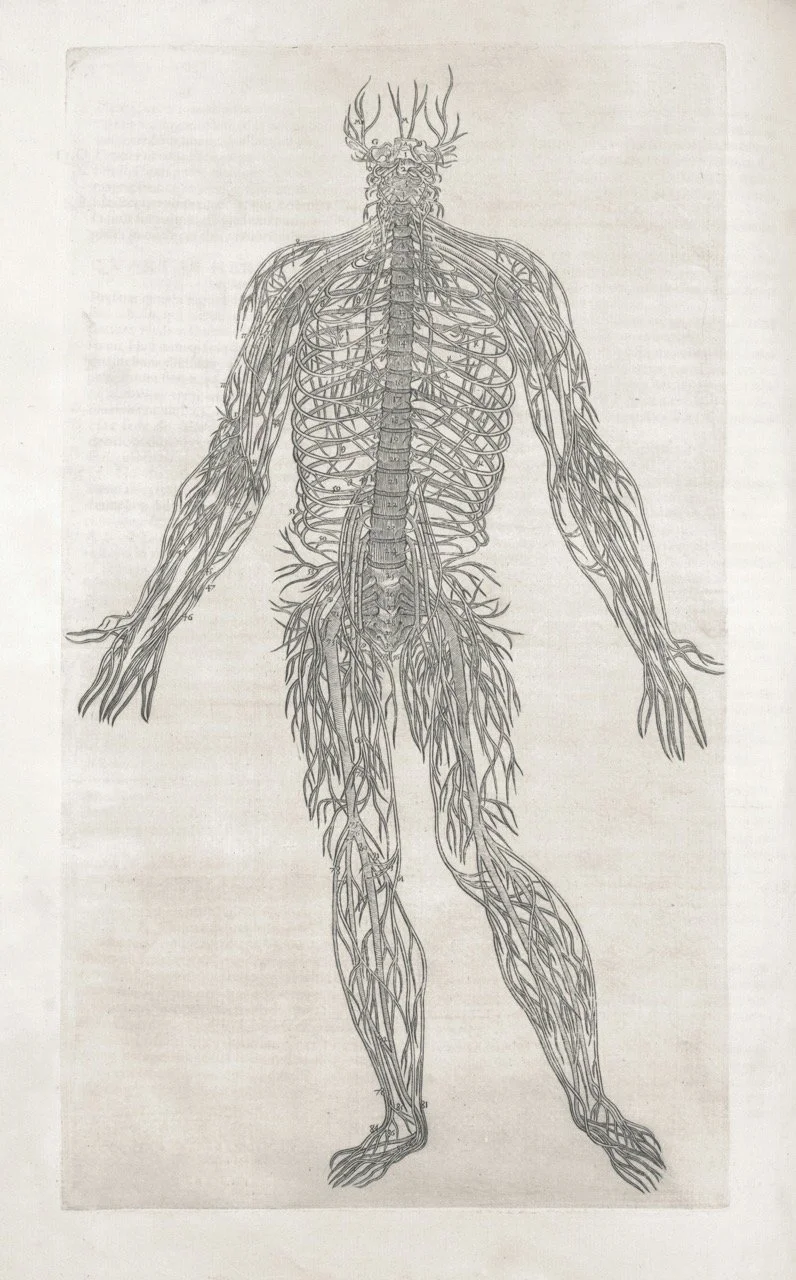
Stabilizing the nervous system doesn’t just prevent burnout — it actively amplifies your creative capacity.
The Nervous System and Creative Work
For me, the biggest revelation in rebuilding a sustainable creative practice was realizing just how deeply my nervous system impacts my creativity. Creativity doesn’t just live in the mind — it lives in the body, in the nervous system’s capacity to regulate stress, arousal, and attention. When my nervous system is dysregulated — racing, exhausted, or overstimulated — my mind struggles to focus, ideas feel stuck, and even simple creative tasks become frustrating or overwhelming. This is why burnout doesn’t just feel like mental fatigue; it physically constrains your ability to imagine, improvise, and take risks in your art.
Research in neuroscience supports this connection. Studies on stress and cognition show that when the sympathetic nervous system (“fight or flight”) is chronically activated, prefrontal cortex functioning — the part of the brain responsible for planning, working memory, and creative problem-solving — is impaired. Conversely, when the parasympathetic nervous system is engaged (“rest and digest”), creativity, insight, and pattern recognition flourish. In practical terms: if you’re constantly in high alert, your brain doesn’t have the bandwidth to think freely, explore, or play with ideas.
This is why structure and containment became my creative allies. A predictable daily rhythm, realistic creative work hours, and consistent self-care routines aren’t constraints on creativity — they are scaffolding for it. When I can trust my system to feel safe, I can relax into the work, experiment, and allow ideas to flow naturally. For example, waking up at the same time every day, taking intentional breaks, and checking in with my energy before diving into deep creative sessions helps me avoid overstimulation and mental fog.
Practical steps to support your nervous system and creativity:
DAILY RHYTHM
Wake up and go to bed at consistent times to stabilize your circadian rhythm.
MICRO CHECK-INS
Pause 2–3 times a day to notice tension in your body, take deep breaths, or stretch.
MOVEMENT & BREATHWORK
Gentle movement — yoga, walking, or Qi Gong — helps regulate the nervous system. Slow, deep breathing activates the parasympathetic system.
BOUNDARIES AROUND WORK
Define clear start and end times for creative work to prevent chronic stress.
REST & PLAY
Schedule “off” time for your nervous system to reset. Creativity often sparks during unstructured moments.
ENVIRONMENT
Organize your space to reduce overstimulation — natural light, decluttered work areas, and intentional music or silence can all help.
When I implemented these practices, I noticed something remarkable: my creativity became more fluid, resilient, and joyful. Ideas that used to feel blocked or overwhelming now arrive with clarity, and the fear of “not being ready” diminishes. In short, stabilizing the nervous system doesn’t just prevent burnout — it actively amplifies your creative capacity.
From Inspiration to Practice
Inspiration is beautiful—but it’s unreliable.
What actually sustains creativity over years is practice. Not heroic effort. Not constant output. But a steady, honest relationship with the work.
For me, this meant:
letting go of unrealistic daily expectations
working with fewer tools instead of more
turning vague intentions into specific assignments
accepting that progress looks boring from the outside
This shift was reinforced deeply when I encountered ideas like Ed Sheeran’s “dirty faucet” metaphor and Venus Theory’s Homework Theory—both of which point to the same truth:
You don’t create good work by waiting for clarity.
You create clarity by working.
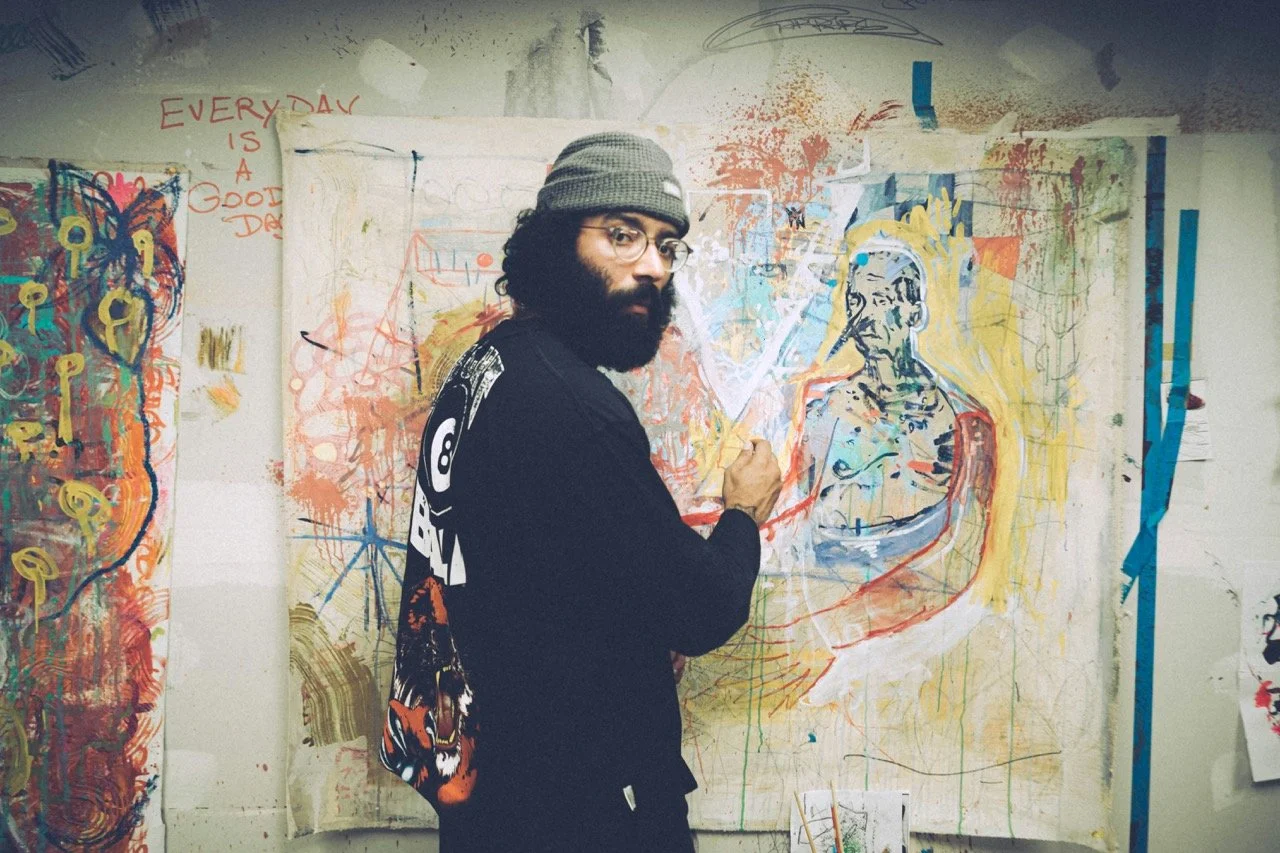
You don’t create good work by waiting for clarity.
You create clarity by working. The Homework approach can be helpful in turning vague intentions into specific assignments that help you finish your creative projects.
What a Sustainable Creative Practice Actually Looks Like
It’s not glamorous.
It’s not dramatic.
And it rarely looks impressive from the outside.
A sustainable creative practice doesn’t announce itself.
It reveals itself quietly, through repetition.
You might notice it in small, almost unremarkable ways:
You’re showing up regularly
… not every waking hour, but often enough that creativity has a place in your life.
You’re finishing things
… maybe small things. Maybe imperfect things. But things get completed and released instead of endlessly reworked or abandoned.
You’re sharing your work
… with a friend, a teacher, a small audience — instead of keeping everything hidden until it feels “good enough.”
You’re creating even when you don’t feel inspired
… and resting without guilt when you don’t have the capacity.
You’re devoting time to skill building
… practicing your instrument, learning theory, refining technique — not as self-punishment, but as care for your craft.
You’re less reactive to comparison
… other people’s success might still sting sometimes, but it no longer derails you.
You recover more quickly from doubt
… the inner critic still appears, but it no longer decides whether you get to create.
You trust the process
… enough to stay with it, even when results are slow or invisible.
A sustainable creative practice is not about intensity — it’s about continuity.
It’s choosing devotion over ambition.
Process over performance.
Depth over speed.
It’s building something slowly, with repetition and care, rather than burning bright and disappearing.
And over time, something quietly profound happens:
You stop obsessing over whether you’re a “real artist.”
Because your actions — your consistency, your curiosity, your willingness to stay — have already answered that question for you.
Fuel Your Creativity with Joy
A sustainable creative practice isn’t just about showing up—it’s about showing up in a way that actually delights your nervous system. Structure, routines, and boundaries give you containment, but here’s the twist: joy is the true fuel.
Here’s something to try on for size: what if at least half of your creative time left you feeling proud, excited, or completely in flow?
That small moment when a chord clicks, a phrase lands, or a sketch feels just right isn’t trivial…
… it’s energy you’re storing in your system, ready to power your next session. Joy doesn’t just feel good; it literally fuels your ability to create consistently over time.
Protecting your nervous system and chasing joy aren’t opposites—they feed each other. The more you build safety and rhythm into your day, the freer your play becomes. Structure doesn’t restrict you—it trampolines your creativity, letting it bounce higher, faster, and farther than endless “freedom” ever could.
Balance is the magic. Containment gives you consistency. Joy gives you momentum. Together, they create a sustainable practice that doesn’t just survive—it thrives.
How to become a Pro Artist?
Create in a way your nervous system can sustain — and that leaves you feeling happier each time you return to the work.
Summary
A sustainable creative life isn’t built on constant inspiration, heroic discipline, or endless output. It’s built on rhythm, care, and commitment that you can actually maintain.
At its core, sustainability means creating in a way your nervous system can support. When life is chaotic, creativity becomes fragile. When your days have shape, limits, and predictability, creativity can finally relax and take root. Structure isn’t the enemy of art — it’s what allows art to survive and thrive over time.
A sustainable creative practice also means letting go of perfection and intensity. You don’t need to push harder or want it more. You need to show up consistently, finish what you start, and allow your work to be imperfect while it grows. Progress comes from repetition, not pressure.
Here’s the twist: at least half of your creative time should spark pride, joy, or that effortless flow. Creativity isn’t just about avoiding burnout — it’s about actively fueling your nervous system with positive energy. Those moments of satisfaction, play, and excitement are what actually sustain your practice over the long term. Joy and structure work together: containment provides safety, and joy provides momentum.
Instead of treating creativity as something you squeeze into leftover energy, you give it a stable place in your life. You work within realistic timeframes. You rest without guilt. You learn your craft patiently. You build skill, confidence, and enjoyment side by side.
Over time, this way of working changes how you see yourself. You stop measuring your legitimacy by outcomes, validation, or comparison. You start trusting your actions. Your identity as an artist becomes grounded in what you do — not in how inspired or productive you feel on any given day.
A sustainable creative life is not about doing more. It’s about staying.
And staying — with structure, with joy, with patience — is what allows your work — and you — to deepen, flourish, and endure.
A Closing Invitation
If you take one thing from this article, let it be this:
Your creativity doesn’t need more intensity.
It needs trust, structure, time and joy.
A sustainable creative practice is built the same way any meaningful relationship is built—slowly, honestly, and with respect for limits.
And that, in my experience, is what allows creativity not just to survive—but to deepen.