The Homework Theory: Why Structure Finally Made Me Feel Like a Musician
This blog post was inspired by the YouTube video “The Homework Theory: Making Music Effortless”. In his Homework Theory, creator Cameron, from Venus Theory argues that creative work gets done not through inspiration or endless freedom, but through constraints, deadlines, and commitment.
If you don’t know Cameron’s work yet: he creates some of the most thoughtful, honest, and intelligent content about creativity, music, and the realities of being an artist. I highly recommend his channel.
When I watched Venus Theory’s video on The Homework Theory, something clicked — not just intellectually, but emotionally. It gave language to a shift I’ve already been living through in my own life as a musician. In this article, I want to share an applied perspective on the Homework Theory. In other words: what does it actually look like when this idea is put into practice? And how might it transform your creative life, too?
I also want to be clear that I’m not here to copy or repackage Venus Theory’s ideas as my own, but to share how applying his Homework Theory has profoundly changed the way I work as a musician — in the hope that it might support you on your own creative path.
So lets dive in:
What the Homework Theory is about
At the heart of the Homework Theory is a simple but confronting idea: meaningful creative work doesn’t emerge from waiting to feel inspired or from having unlimited freedom, but from choosing structure, limitation, and follow-through. Cameron explores this with a rare level of clarity and honesty, speaking directly to the lived reality of artists rather than the fantasy.
His core idea, behind the homework theory, is simple:
“If you really want to get something done, you need to make it an assignment, not an option.”
So instead of relying on motivation, he proposes treating creative ideas like homework:
Clearly defining your goals
Limiting your tools
Working with concrete constraints
Giving yourself a deadline
To support his hypothesis, he traces how creative limitation has repeatedly given rise to great art throughout history. In the video, he references figures such as Stravinsky, Miles Davis, Brian Eno, and Matisse, as well as movements like Dogma 95, offering concrete examples that vividly demonstrate the power of constraint.
There’s far more depth in these examples than I could do justice to here, so I genuinely recommend watching the video if you want to explore this idea more fully.
He ultimately arrives at a simple but striking conclusion:
Constraints don’t kill creativity — they focus it.

But How to Apply the Homework Theory?
Rather than asking “What could I make?” you begin asking “What is the assignment?”
The Homework Theory in Practice
If the Homework Theory resonates with you, the natural next question is: How do I actually apply this to my own creative life?
This is where the theory becomes practical. Instead of waiting for motivation, inspiration, or the “right mood,” Cameron outlines a simple but powerful framework that turns vague creative desires into concrete action.
At its core, this approach removes ambiguity. It replaces endless possibility with clarity, and fantasy with structure. Rather than asking “What could I make?” you begin asking “What is the assignment?” — and suddenly, the work becomes doable.
The following five steps are not about forcing creativity or producing perfect results. They are about creating the conditions in which creativity can move forward, consistently and without drama. When applied gently but firmly, this framework can shift your relationship to making art from something optional and emotionally charged into something grounded, focused, and surprisingly freeing.
If you want to apply the homework theory to your own creative process, Cameron proposes this five-step framework:
Reword your idea as an assignment
Define what you want to make
Break it into actionable steps
Limit tools and options
Set a firm deadline (!!!)
But why does this actually work?
One of the reasons the Homework Theory is so effective is that it directly counters a tendency many of us fall into as creatives: mistaking unlimited freedom for creative potential. Venus Theory references Parkinson’s Law, which states that work expands to fill the time available for its completion. In other words, the more time and openness we give a project, the more it tends to sprawl, stall, or quietly dissolve.
When there is no clear boundary — no deadline, no defined scope, no limitation on tools — a project can remain safely unfinished. It lives in the realm of possibility, where it never has to face the discomfort of being made real. Too much time invites hesitation. Too many options invite doubt. And before we know it, the project is abandoned not because of a lack of talent or care, but because the container was too wide to hold it.
Homework works precisely because it narrows the container. It introduces structure where there was vagueness, accountability where there was avoidance, and momentum where there was overthinking. A defined assignment shifts the focus from “Is this good enough?” to “What is the next step?” — and that shift alone can be transformative.
The deeper takeaway here is this: creativity isn’t about imagining endlessly — it’s about doing, within limits. It’s in the act of making, constrained and imperfect, that ideas gain shape, clarity, and life.
From “I Could” to “I Must”
Now feels like the right moment to share how the Homework Theory has reshaped the way I approach my creative work. Something truly clicked for me when I watched Cameron’s video on the topic. He opens with a deceptively simple line:
“If you really want to get something done, you need to make it an assignment — not an option.”
It hit me immediately. For years, my creative life had been full of options:
I could practice music theory.
I could finish that track.
I could deepen my understanding of harmony and chords… someday.
And yet, nothing ever truly stuck.
For a long time, I felt trapped on a frustrating plateau. I had been making music for five years, but I kept running into the same invisible barrier: my limited grasp of music theory and an underdeveloped ear. No matter how much passion or intuition I poured into my work, I couldn’t fully engage with the music the way I wanted to.
What weighed on me most was the feeling of being an “eternal beginner.” I would catch myself asking: Can I really call myself a musician if I don’t immediately know that three sharps mean A major? That gap between how I felt and how I wanted to feel professionally never seemed to close.
My desire to study music theory more seriously wasn’t about curiosity alone. It was about finally building professional confidence and clarity in my musical understanding. I wanted to stop relying on guesswork, to hear more clearly, and to meet music on a deeper, more intentional level.
So after stumbling across Cameron’s video on YouTube, I did something profound:
I gave myself homework.
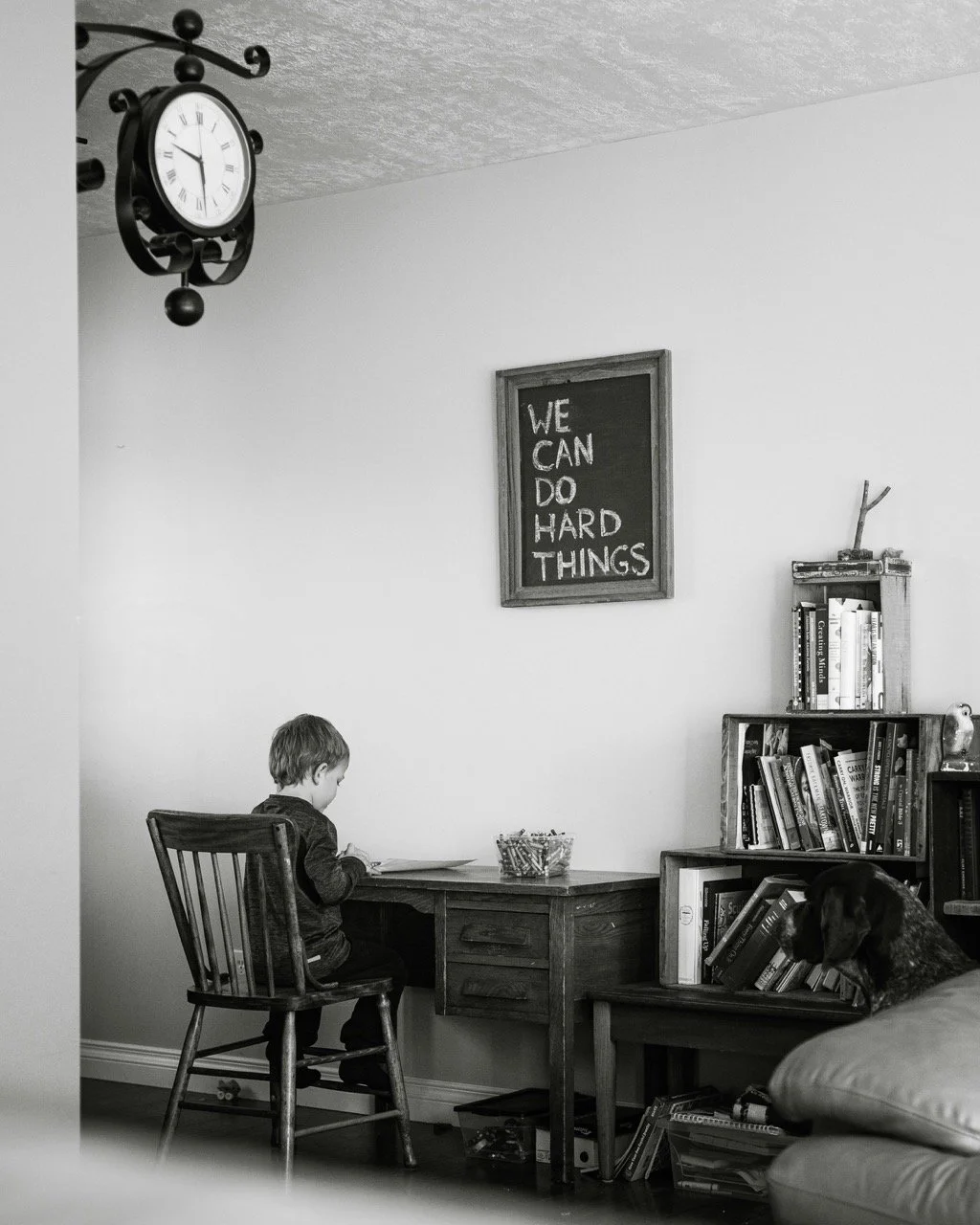
“If you really want to get something done, you need to make it an assignment, not an option.”
– Cameron from Venus Theory
Making Music Theory Non-Optional
I enrolled in a course designed to prepare me for the university aptitude test for musicians.
This isn’t a small commitment:
60 lessons in total
Each lesson takes about 4 hours
Clear structure and expectations
So far, I’ve completed six lessons, and the difference is already astonishing.
Why?
Because me engaging with music theory is no longer optional.
Before, my attitude was casual: “If I feel like it, I might spend an hour on music theory today.”
Now, music theory is non-negotiable. It’s a structured path toward a clearly defined goal: studying music at university. It’s homework. And as Cameron emphasizes, homework changes everything.
Suddenly, I’m not dabbling. I’m building real, professional competence. The deadlines, the structure, the accountability — even if it’s just accountability to myself — have transformed the way I approach learning. No longer lost in indecision or endless possibilities, I’m focused. I’m moving forward.
This is exactly the point Cameron makes: constraints don’t limit us — they free us from indecision. By turning creative work into assignments, we stop floating in a sea of “I could” and start making meaningful progress.

“The more constraints one imposes, the more one frees oneself.”
– Igor Stravinsky
Ableton, Deadlines, and Letting Bad Songs Exist
Another place where the homework theory changed my life is music production.
I’ve been taking Ableton lessons with a teacher. We meet every two weeks. I get assignments. I have deadlines.
And suddenly:
I finish tracks
I stop abandoning projects halfway
I stop asking, “Who cares if this is bad?”
Because someone does care.
My teacher relies on me finishing the homework so we can move forward. That external structure forces me out of the fantasy of the “perfect track I could make someday” and into the reality of making real (imperfect) music now.
This ties directly into something I wrote about before — Ed Sheeran’s idea of “opening the faucet.” You don’t wait for great songs. You let the bad ones flow out first.
Homework gives that process rails.
It turns chaos into momentum.
Imagination Isn’t the Same as Using It
One of the lines that stayed with me most from Venus Theory’s video is this:
“Relying on your imagination is not the same thing as actually using it.”
As creators, it’s easy to live in potential — in ideas, intentions, and visions of what could exist one day. Homework gently but firmly pulls us out of that space and into execution. It asks us to stop circling possibilities and to begin making something real.
Venus Theory’s five-step framework — turning ideas into assignments, deliberately limiting tools, and setting clear deadlines — isn’t presented as a magic formula. And that honesty is part of why it works. It doesn’t promise shortcuts or instant brilliance. Instead, it acknowledges something deeply human:
Sometimes we don’t need more freedom.
Sometimes, we need structure — not to cage our creativity, but to give it a direction to move in.
And often, that’s exactly what allows imagination to finally take form.

Sticking to Deadlines makes Growth Inevitable
And that’s what finally allowed me to move from feeling like an amateur to acting like a professional.
Turning Creativity Into Something You Can Turn In
So in the end, what makes homework so powerful isn’t magic. It’s simple:
There’s a deadline.
There’s a defined task.
There’s no endless “maybe later.”
That structure is what finally helped me move from feeling like an amateur to acting like a professional. Not because I suddenly felt more inspired, but because I stopped making my growth optional.
If you’ve ever felt stuck, overwhelmed, or “forever about to start,” maybe the missing piece isn’t motivation — it’s homework. The kind of structured, accountable, deadline-driven work that turns creativity from a vague idea into something you actually produce.
As Venus Theory says, it’s time to stop endlessly consuming advice and inspiration — and start doing the work. Because creativity doesn’t live in ideas alone; it lives in action. And that action, when focused and intentional, is how real growth happens.
A Special Thank You
I want to offer a heartfelt thank you to Cermon, from Venus Theory for creating such a thoughtful, honest, and beautifully made video. His work on YouTube consistently cuts through the noise of surface-level creative advice and speaks to what actually helps artists create, finish, and grow.
Creators like him rely on our support to keep producing content of this depth and quality—so if this article resonated with you, I highly encourage you to check out his YouTube channel, engage with his work, and support the creators who genuinely move the creative conversation forward.
P.S. The Music Room
If this idea of turning your creative work into something you can actually turn in resonates with you, The Music Room might be a supportive next step. It’s a small, supportive online gathering where musicians share works-in-progress, receive kind and thoughtful feedback, and build momentum together. It’s a way to practice giving yourself assignments — and then showing up to share them — without pressure, perfection, or performance. Sometimes, consistency doesn’t grow in isolation, but in being witnessed by others who are walking a similar path. You are warmly invited.