Slow Practice: The Key to Consistent, Effective Musicianship
Musicians often struggle with practice. We want results fast. We want to play songs perfectly yesterday. The frustration of slow progress can make practice feel like a chore rather than a path to growth. But there’s a better way: slow, deliberate practice — a method proven to build lasting skill, precision, and confidence.
What Deliberate Practice Really Is
The foundation of slow practice comes from the concept of deliberate practice, first defined by K. Anders Ericsson and colleagues in 1993. In their landmark research (Psychological Review), they studied expert performers across domains — musicians, athletes, chess players — and found that high achievement depends far more on structured, goal-oriented practice than on innate talent. [1]
Deliberate practice is
focused,
specific,
and repeated with attention to detail.
It’s not just playing a song over and over; it’s working on the parts that challenge you, correcting mistakes immediately, and pushing yourself just beyond your comfort zone. For musicians, this is where slow practice becomes essential.
“Expert performance is not a matter of talent alone, but the result of focused, goal-directed practice over time.” — Ericsson, Krampe & Tesch-Römer, 1993 [1]
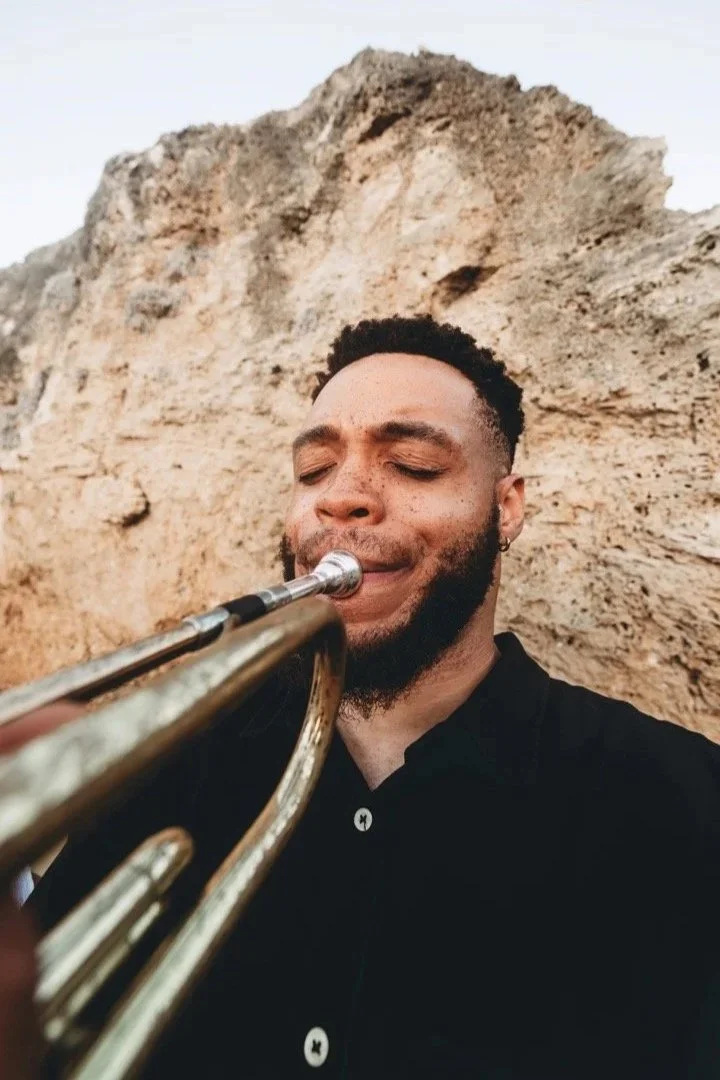
Research shows that how you practice matters just as much as how long you practice.
How This Relates to Music
Deliberate practice becomes tangible when it meets your instrument or your voice. This is where abstract ideas turn into felt experience — where learning stops being conceptual and starts becoming physical, audible, and real. Let’s look at how this translates to your practice sessions:
Metronome work
Working with a metronome is one of the clearest expressions of slow practice. By deliberately lowering the tempo of a difficult passage, you give your nervous system enough time to prepare (and even anticipate) each movement before it happens. At slower speeds, mistakes become visible instead of slipping by unnoticed. The goal isn’t endurance or speed — it’s precision. When you can play a passage cleanly and relaxed at a slow tempo, your body is learning the correct movements. Speed, later on, becomes a natural byproduct rather than something you force.
Chunking complex material
Instead of practicing an entire piece from beginning to end, slow practice invites you to work in small, manageable sections. This might mean isolating just two bars, one chord transition, or a single rhythmic figure. By mastering these “chunks” individually, you reduce cognitive overload and allow your attention to stay focused. Once each section feels stable, you begin to stitch them together — not as a struggle, but as a smooth continuation of something you already know.
Recording and listening back
Recording yourself is one of the most honest forms of feedback available. While playing, your attention is divided between technique, sound, and coordination. Listening back removes that pressure and lets you hear your playing objectively. Subtle timing issues, uneven dynamics, or tension in your tone often become obvious only in retrospect. This kind of feedback loop turns practice into a conversation: play, listen, adjust, repeat.
External feedback and shared practice
Deliberate practice doesn’t have to happen in isolation. Teachers, mentors, or even a small practice group can help you notice patterns you might overlook on your own. External ears can catch inefficient habits early — before they become ingrained. Even simply articulating what you’re working on to another person can clarify your intention and strengthen your commitment. (For exactly this purpose, I’ve created The Music Room.)
This is slow practice in action: methodical, attentive, and patient. It replaces vague effort with clear focus. Instead of asking “How long did I practice?” the question becomes “What did I refine today?”
Over time, this approach doesn’t just improve your playing — it changes your relationship to learning itself.

Key Principles of Deliberate Practice
To practice effectively, structure your sessions around these principles:
Clear goals
Know exactly what you want to improve in a session.
Focused effort
Avoid distractions and practice with full attention.
Feedback loops
Use recordings, teachers, or peers to spot mistakes.
Repetition with refinement
Repeat slowly, correct errors, and build precision.
Why Slow Practice Works: The Science
The science behind slow practice is remarkably consistent. Research from neuroscience and motor learning shows that how you practice matters just as much as how long you practice. When movements are repeated slowly and with precision, the brain has the time it needs to form clear, stable neural pathways between intention and execution. These pathways are the foundation of what we often call “muscle memory” — though, in reality, the learning happens primarily in the brain, not the muscles themselves.
When practice is rushed, the brain doesn’t simply learn faster — it learns whatever is repeated, including tension, inaccuracies, and inefficient movements.
Slow practice, by contrast, reduced cognitive load and allows the nervous system to encode the correct sequence of actions with greater accuracy. Over time, these well-formed neural patterns become automatic, making fluent and faster execution possible without added effort.
Several strands of research support this:
Motor skill learning research and meta-analyses
A comprehensive review by Dayan & Cohen (2011) demonstrates that motor skill learning reshapes neural networks most effectively when movements are practiced with attention, consistency, and error correction — not speed alone [1]. Similarly, classic neuroimaging work by Karni et al. (1995) showed that accurate, repeated execution of motor tasks leads to lasting reorganization in the motor cortex, helping explain why slow, deliberate repetition produces more durable learning over time [2].
Studies on piano sight-reading and musical performance
Studies in music psychology point in the same direction. Research on piano sight-reading and musical performance has found that musicians who engage in structured, goal-oriented practice — slowing down difficult passages, isolating problems, and reflecting on errors — consistently outperform those who rely on casual repetition or simply “playing through” pieces. For example, Lehmann & Ericsson (1996) found that expert pianists differed from less advanced players not in talent, but in how deliberately they practiced [3]. Longitudinal research by McPherson & Renwick (2001) further shows that self-regulated, reflective practice strategies predict musical improvement more reliably than total practice time alone [4].
These findings build on the foundational work of Ericsson, Krampe, & Tesch-Römer (1993), who introduced the concept of deliberate practice [5]. Their research demonstrated that expert musicians develop their skills through sustained periods of focused, goal-directed practice with feedback — a process that frequently involves slowing things down to refine specific weaknesses. You can find a link to their paper in the references below.
Taken together, this research points to a simple but powerful principle:
Slow practice builds accuracy first — and when accuracy is stable, speed follows naturally.
Rather than forcing progress, slow practice allows progress to emerge from clarity, repetition, and care.
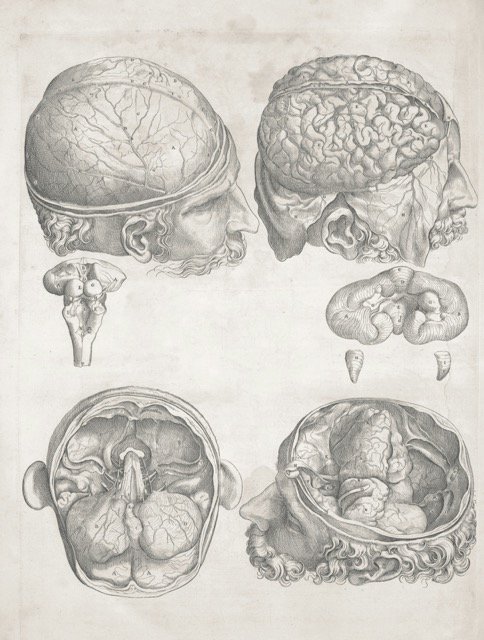
With sustained, accurate practice, your brain devotes more real estate to the skill.
How to Put Slow Practice into Action
1. Set a single goal per session
Instead of trying to “conquer the whole piece,” pick one specific challenge to focus on — a tricky chord transition, a difficult rhythm, or a passage that always trips you up. By narrowing your focus, your brain can dedicate full attention to mastering that one thing, and progress becomes tangible.
2. Use a metronome to slow tempo
Start at a speed where you can play the passage perfectly, even if it feels painfully slow. Accuracy first. Speed comes later. The metronome keeps you honest and helps your brain and fingers synchronize precisely. Think of it as training your muscles to “remember correctly” before you ask them to do it fast.
3. Chunk complex passages
Break the music into small, manageable sections. Work on each “chunk” until it feels solid, then connect them slowly. This prevents overwhelm and ensures each part is reinforced in your motor memory. A 4-bar section done well is worth more than an entire page played sloppily.
4. Reflect and adjust
Record yourself and listen back critically. Ask: Did I hit every note? Is my timing steady? Are my dynamics even? Use what you hear to make small, precise adjustments. External feedback — from a teacher, peer, or even your own recording — ensures you’re not practicing mistakes.
5. Track small improvements
Keep a simple log of what you achieved in each session. Even noticing that one tricky note no longer trips you up is progress. Celebrating these small wins triggers dopamine, which reinforces the behavior and keeps you coming back.
Slow practice is not about playing less; it’s about playing smarter. By focusing on precision, reflection, and small, incremental improvements, you train both your body and your brain — and when speed naturally follows, it’s effortless and reliable.
The Brain will Learn Whatever you repeat. Slow practice is about Practicing smarter and prioritizing accuracy over speed.
Common Misconceptions About Practice
“Practice makes perfect” vs. “Practice makes permanent”
If there is only one thing you take away from this article, make it this: It’s not the quantity of practice that makes you better — it’s the quality. If you repeat mistakes, your brain and muscles solidify the wrong movements, turning errors into habits that are hard to unlearn. Slow practice forces you to focus on accuracy first, ensuring that every repetition reinforces the right technique. Think of it as building a house: a crooked foundation will cause problems later, no matter how quickly you build the walls.
Talent vs. structure
Even the most ‘naturally gifted’ musicians need deliberate, structured practice. Talent (if it even exists is open to be discussed) may give you a head start, but without slow, focused work, your progress plateaus. Structured practice helps you identify weaknesses, systematically improve them, and turn raw ability into reliable skill — the kind that performs consistently under pressure.
Rushing equals progress? Think again
Playing fast does not equal mastery. Believe me, I learned the hard way (unfortunately). Speed without control often leads to sloppy technique, inconsistent timing, and frustration — and ultimately slows your progress because you’ll have to repeatedly fix the same mistakes. By slowing down, you give your brain and body time to encode the correct movements. When speed comes later, it’s smooth, confident, and precise.

Practice doesn’t automatically make you perfect.
Practice programs your brain to repeat whatever you feed it. If the input is faulty, the sound will be too.
Conclusion: Slow Practice is the Long-Term Shortcut
Sustainable growth as a musician isn’t magic. It’s not about practicing longer or harder. It’s about practicing with intention, attention, and patience. Slow practice turns learning into something reliable: mistakes are noticed early, corrections are absorbed deeply, and each repetition strengthens the neural pathways that support long-term mastery.
Rather than chasing speed, slow practice builds accuracy, control, and confidence — the qualities that make speed effortless later on. It allows your brain and body to learn the right movements once, instead of unlearning the wrong ones over and over again. For musicians ready to see real improvement, slowing down, is the fastest way to go fast.
If you want real, lasting improvement, the path is clear: Slow down. Pay attention. Practice with care.
Because for musicians who are ready to grow — slowing down isn’t a setback. It’s the fastest way forward.
References
[1] Dayan, E., & Cohen, L. G. (2011). Neuroplasticity subserving motor skill learning. Neuron, 72(3), 443–454. https://doi.org/10.1016/j.neuron.2011.10.008
[2] Karni, A., et al. (1995). Functional MRI evidence for adult motor cortex plasticity during motor skill learning. Nature, 377, 155–158.
https://doi.org/10.1038/377155a0
[3] Lehmann, A. C., & Ericsson, K. A. (1996). Performance without preparation: Structure and acquisition of expert sight-reading. Psychomusicology, 15, 1–29.
[4] McPherson, G. E., & Renwick, J. M. (2001). A longitudinal study of self-regulation in children’s musical practice. Music Education Research, 3(2), 169–186. https://doi.org/10.1080/14613800120089232
[5] Ericsson, K. A., Krampe, R. T., & Tesch-Römer, C. (1993). The role of deliberate practice in the acquisition of expert performance. Psychological Review, 100(3), 363–406. Read the full paper here: https://graphics8.nytimes.com/images/blogs/freakonomics/pdf/DeliberatePractice(PsychologicalReview).pdf
Related Content on This Site
How to Build a Sustainable Creative Practice (Without Burning Out) Read More
The Power of Consistency in Practice: Why 10 Minutes a Day is More Effective Than 2 Hours Once a Week Read More
The Music Room: Join a Community to Stay Accountable and Share Your Work Read More